- What did you learn about our body burdens? I learned that we can carry many chemicals that have been outlawed and not know how we possibly got exposed.
- Were you surprised by the knowledge about maternal/fetal burdens? Absolutely
- How would you incorporate this knowledge into your practice? I will begin by educating my patients about a possible exposure at every visit.
- What do you think about these lab results?They seem pretty scary.
- How would you tell a patient about them if they were their lab results? I would tell them the truth of what they could cause although I do not know what they cause.
- Were you surprised to hear about chemicals being in the body that don't have "safe" levels? Yes.
- What do you think about the statement “One's zip code matters more than our genetic code"? Yes, I believe some people may worry more about where they live because it is easier to control than their genetic code.
- Do you usually assess environmental health when you take a patient's health history? Yes, especially farm workers. Are you aware of the air and drinking water quality where your patients live? Yes, for some of them, especially those living in low income housing.
- Were you aware of how sensitive the developing brain is to small, maternal exposures? Yes.
- How will this change your practice regarding educating pre- and peri-natal patients? I believe it is essential.
- Had you heard of BPA prior to these articles?Yes, but not in depth.
- How will you educate your patients on the risks of BPA? I will print out literature and hand it out to them or provide them with websites where they can learn more.
- What about patients who may not have the means or the access to completely avoid BPA-containing products? I believe that even if a person is poor, they would not want to be exposed to cancer. Many times they cant afford the products that contain BPA such as bottled water and drinks.
Saturday, February 16, 2019
Blog #6

Blog #6-Hot News
Blog #6_Hot News
https://www.theguardian.com/business/2019/feb/14/weed-killing-products-increase-cancer-risk-of-cancer
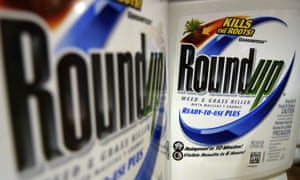
In a recent article written by The Guardian, it is reported that Roundup, a worldwide used weed killer has been linked to Non-Hodgkin's Lymphoma (NHL). The company currently is being sued for millions of dollars. Monsanto and Bayer the owners face more than 9,000 lawsuits for their connection to the use of roundup and NHL. The study has been carried out by 5 scientists who state that individuals exposed to Roundup are up to 41% more likely to develop NHL. If this were to be true, then how concerned should we be as so many households use this weedkiller at home in the backyard where children play. Think of all exposed children at school playgrounds.
https://www.theguardian.com/business/2019/feb/14/weed-killing-products-increase-cancer-risk-of-cancer
In a recent article written by The Guardian, it is reported that Roundup, a worldwide used weed killer has been linked to Non-Hodgkin's Lymphoma (NHL). The company currently is being sued for millions of dollars. Monsanto and Bayer the owners face more than 9,000 lawsuits for their connection to the use of roundup and NHL. The study has been carried out by 5 scientists who state that individuals exposed to Roundup are up to 41% more likely to develop NHL. If this were to be true, then how concerned should we be as so many households use this weedkiller at home in the backyard where children play. Think of all exposed children at school playgrounds.
Blog #5_Hot News
Blog #5/Hot News
This article https://www.healthychildren.org/English/ages-stages/baby/feeding-nutrition/Pages/Baby-Bottles-And-Bisphenol-A-BPA.aspx

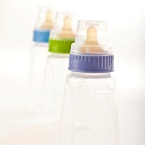
Yes, that is the surprised look we all should have when we learn that BPA - a cancer causing agent is found in baby bottles! I was shocked when I read this article put out by American Academy of Pediatrics in 2012. A chemical known as bisphenol A (BPA) is used to harden plastics, keep bacteria from contaminating foods, and prevent cans from rusting.Although useful, it is known to be linked to an increased risk in cancer. How then can it be used in baby products, especially baby bottles? Food for thought.
The line that caught my attention for the book Having Faith was "Knowing simply seemed better than not knowing," I am quite the opposite. I would be much happier not knowing. When I had my first baby, I already was a registered nurse and I worked in post-partum care. I worked the night shift and on my breaks I would go to the labor and delivery or the PICU. I would see so many little helpless babies full of tubes and wires. I feared that my baby would be born with something wrong with him/her. I chose not to do any of the high risk prenatal testing. I preferred not to know of Trisomy 21, Downs syndrome or anything else. I did not even want to know the sex of the baby. My son was born with two free knots tied around his neck and was born half dead. I just remember a very pale baby who had to be brought back to life. by a special team of pediatrics rescue team. My second child was a threatened abortion for eight months with bleeding and severe pre-eclampsia during my pregnancy My third pregnancy was a twin pregnancy, where I lost one of my babies due to complicated pregnancy with again bleeding for eight months. Now that my children are older, they do have weird thing going on. My oldest has a cough no one could diagnose for 4 years, then he moved to San Diego and he is curred. my youngest had unusual symptoms of vision loss, ringing in the ears, maybe its because of all the chemicals I was exposed to. I also breastfed them all. Reading Having Faith just made me think that the more I know the less I want to know.
- What did you find after researching your household products?
- Were the results what you expected? I found more risk in everyday household items than I thought I would find.
- Are there products you will now recommend your patients use or avoid? Yes, I will recommend that they not buy clear plastic baby bottles.
- Did you learn about any new chemicals after taking the quiz? I found that I am an unsuspecting victim.
- What chemicals commonly found in products are most concerning for your patient/community population? At the moment I find BPA the most concerning since it is difficult to believe that it is found in so many household products and yet the general public is unaware.
- How might we shift our policies regarding potentially toxic chemicals so that our personal and household products are less risky propositions? We must first contact our congress representative and hold them accountable for enacting legislation to regulate the use of potential toxic chemicals such as BPA.
Sunday, February 3, 2019
HOT NEWS Blog #3
A recent new reports on January 28, 2019 reports the association of dangerous chemicals in women's sanitary pads and babies diapers. This article describes both pads and diapers contain volatile organic compounds and phthalates which are absorbed by the genitals, which can lead to hormone dysfunction. There was a research study done secondary to a class action law suit against a sanitary pad manufacturer. More than 15,000 women claimed, rashes, infections and painful menses. They won and pads were pulled off the market. Research study sampled several brand famine pads and found an several chemical compounds that could cause harm. These samples were taken form several markets including Korea, Japan, Finland, France, Greece and the United States.Unfortunately, the names of the brands were not disclosed. How are then consumers supposed to protect themselves? How can we not be able to protect our babies. Maybe, we should stop buying diapers and go back to cloth.
A recent new reports on January 28, 2019 reports the association of dangerous chemicals in women's sanitary pads and babies diapers. This article describes both pads and diapers contain volatile organic compounds and phthalates which are absorbed by the genitals, which can lead to hormone dysfunction. There was a research study done secondary to a class action law suit against a sanitary pad manufacturer. More than 15,000 women claimed, rashes, infections and painful menses. They won and pads were pulled off the market. Research study sampled several brand famine pads and found an several chemical compounds that could cause harm. These samples were taken form several markets including Korea, Japan, Finland, France, Greece and the United States.Unfortunately, the names of the brands were not disclosed. How are then consumers supposed to protect themselves? How can we not be able to protect our babies. Maybe, we should stop buying diapers and go back to cloth.
BLOG #4/ In Harm's way
I have to say that reading the article "In Harms Way" was truly an eye opener for me. As a medical provider, I thought I knew about toxins and substances that affect health such as Mercury in fish and Lead in soil. In my medical practice it is standard practice to check lead levels for children during the CHDP physical exam. It is also very common for us to find lead toxicity in our patients. I serve a farm working community who is not only exposed to lead but also to other many pesticides and chemicals. These patients live in very poor older housing that is probably contaminated with lead. This article has further helped me to understand how serious these exposures really are. It is too sad that the poorest and most vulnerable are the most helpless to do anything to change their situation. I think the biggest problem is lack of knowledge. Most of the time the patients do not know why we are checking their blood. They believe it is only a requirement for school like immunizations. I constantly try to make sure that my patients leave with at least some understanding of the care they receive. Due to literacy problems, comprehension is still very limited. I believe that a lot more patient education needs to be done in order to address this huge environmental problem.
I have to say that reading the article "In Harms Way" was truly an eye opener for me. As a medical provider, I thought I knew about toxins and substances that affect health such as Mercury in fish and Lead in soil. In my medical practice it is standard practice to check lead levels for children during the CHDP physical exam. It is also very common for us to find lead toxicity in our patients. I serve a farm working community who is not only exposed to lead but also to other many pesticides and chemicals. These patients live in very poor older housing that is probably contaminated with lead. This article has further helped me to understand how serious these exposures really are. It is too sad that the poorest and most vulnerable are the most helpless to do anything to change their situation. I think the biggest problem is lack of knowledge. Most of the time the patients do not know why we are checking their blood. They believe it is only a requirement for school like immunizations. I constantly try to make sure that my patients leave with at least some understanding of the care they receive. Due to literacy problems, comprehension is still very limited. I believe that a lot more patient education needs to be done in order to address this huge environmental problem.
- Toxicology
- Does your new knowledge regarding toxicology have you thinking about what questions you might want to ask your patients regarding their potential exposures in their homes, schools, and workplaces? Yes, I will be more diligent in asking and educating my patients about their potential exposure to toxic harm by everyday exposure to things they may not see at harmful.
- Will this change or add to your practice. This will both change and add to my practice
- Fracking
- Is there any gas or oil activity in your community? How about
refineries or pipelines for gas/oil? (You'll be learning more about this
in the module on Energy and Health.) There is actually a big controversy over fracking in Fresno county. There was a prior victory in 2011 in the San Jose court to halt a fracking site involving over 2700 acres (Haagenson, 2013). The biggest concern was the amount of water that would be needed to frack. There is also concern for contaminants that may seep into the water supply.
- Is there any gas or oil activity in your community? How about
refineries or pipelines for gas/oil? (You'll be learning more about this
in the module on Energy and Health.) There is actually a big controversy over fracking in Fresno county. There was a prior victory in 2011 in the San Jose court to halt a fracking site involving over 2700 acres (Haagenson, 2013). The biggest concern was the amount of water that would be needed to frack. There is also concern for contaminants that may seep into the water supply.
- Lead
- Do you feel comfortable educating patients about lead-based paint poisoning prevention? How about what to do if there are elevated lead levels in your community's water? Have you done any work on lead poisoning in the past? (Good resources for this are provided in the resource section) Yes, I feel comfortable educating my community regarding my community regarding lead toxicity. I worked in a rural health center and served many poor communities for over 15 years. These poorer communities have great exposure to lead toxicity due to older housing and contaminated soil. The local health department is very involved in testing the water and educating the community medical providers about lead risks in the area. I have worked as a medical provider and I have identified and treated patients wiht lead toxicity.
- Where is lead a problem in your community (water, soil, paint)?Yes, we have lead in the soil and old paint in older communities.
- Asthma
- Were you aware of the risks of adult onset asthma as a nurse?Yes, I am aware of adult onset asthma.
- Have you known any nurses who developed asthma? Yes, I am a nurse and developed asthma as an adult.
- What are some of the obvious potential triggers to asthma in your workplace? How could you eliminate or reduce these exposures? Some of the potential triggers at home include, fumes form cleaning agents, fragrances worn by coworkers and dust in my office.
- Perchlorethylene
- Are there any dry cleaners near you that use perc? Did you know that there are non-toxic alternatives to perc? The process is sometimes called "wet cleaning". There are dry clearers near my but I am not aware of their use of Perchorethylene. no, I was not was not aware of the use of non-toxic alternatives.
BLOG #1
Compare and contrast your definition of environmental health to the previous definition.
MY Definition of Environmental Health: The health of the environment it that which we have made it to become.
Compare and contrast your definition of environmental health to the previous definition.
MY Definition of Environmental Health: The health of the environment it that which we have made it to become.
- How was your definition different? How was it similar? I believe my definition is somewhat similar. The environment may have its own "natural" triggers that may alter our health such as molds, spores, allergens but for the most part, we generate a lot of changes and pollutants that change our environment.
- Are there elements of environmental health that you are called to more than others? Why is that? I am more called to the elements of air pollution as I have a child who has asthma and has had to move away from home due to the contamination and poor air quality in the Central Valley.
- Did you discover any environmental risks in your home by completing the home assessment?Yes, unfortunately there were more risks than I would have wanted.
- In the home assessment, why did we want to know about the age of your home? (You'll be learning the answer to this when we discuss lead-based paint.)
- Why would we want to know if someone lives in the basement? (You'll be learning more about this when we discuss indoor carbon monoxide exposure.) There is a higher exposure to carbon dioxide in the basement
- Who is responsible for home-based environmental health risks? (The answer to this question is more complex and we will be discussing it in a number of locations in this course and the next 3 courses.) I believe each state should be responsible for it environmental health risks to its citizens as each state may have different risks.
- Were you able to create a list with 10 separate and unique exposures in each area?
- List of Environmental Exposures in my Home.Homes
- Cleaning supplies
- Gas stoves
- Radon* (in air)
- Beauty products
- Cat litter
- Dust mites
- Mercury (salmon, tuna consumption
- Mold, dual pane window build up humidity
- Medications
- Carbon Monoxide
Schools- Lead*
- Mold*
- Radon*
- Allergens*
- Volatile Organic Compounds, chemistry labs
- Fertilizers on school lawn
- Pesticides*
- Indoor/Outdoor Air Pollution
- radio active waves? computer screens?
- Vehicle Emissions (school buses)
Workplaces- Asbestos old buildings
- Radiation (healthcare workers/patients)
- Radon*
- Pesticides*
- Mold*
- Cleaning Supplies (bleach)
- Antibacterial soaps overuse
- Nosocomial Infections
- communicable disease (accidental contact with bodily fluids)
- Respiratory contamination via ventilation system
Community-
- Sun exposure/UV Rays, hot sun in San Joaquin Valley
- Tobacco smoke, vaping
- Molds*
- Pesticides*
- Air Pollution by car exhaust
- spores uprooted form earth during construction
- water supply contamination with antibiotics
- Food made from animals treated with antibiotics
- Radon*
- Allergens, weeds, spores, etc..
- Was it more difficult or easier than you expected? It was mare difficult than I expected.
- Were your exposures specific (such as "atrazine") or broad (such as just "pesticides")? Some were more specific as it related to Radon, natural gas etc. However, as I began to explore risk associated with household personal care products like toothpaste, the ingredients became harder to read and understand. After completing my home assessment, I was surprised to discover environmental risks that I had not thought about such as the use air fresheners. I use air fresheners as we have a cat in the house. I need to start washing my vegetables. I always assumed they came clean from the store. I did not know about the toxicity of flame retardants that I have in my furniture. This was very shocking to me. I feel like buying new furniture but this time I'll be checking labels. As far as lead is concerned, I live in a relatively new home so I hope my lead risk is less. I do not have a basement in my home. After this exercise and watching the third video, I feel very upset that these risks to the consumer are not regulated. I am glad for chemists and environmental specialists that work very hard to protect us. (When we delve into the health effects associated with exposures, we need to be as specific as possible in order to review the literature and other credible sources of information. For example, there are hundreds of pesticides and they each have their own specific health and ecological risks. Therefore, as nurses, we need to be as specific as possible in order to be the most effective and credible in terms of patient/community education, clinical applications, and policy/advocacy efforts.)
Saturday, February 2, 2019
- BLOG #3
- Were you surprised to find out the toxicity rating of your personal care product(s)?Yes, I was quite surprised that something as basic as toothpaste is actually a poison and care must be taken not to swallow more than what would be used for brushing or you must call poison control. This is scary, I think I will use basic arm and hammer baking soda instead like my grandama nd live to be 99 years old.
- Did you decide to change any of your consumer behaviors based on your findings? Yes, I will look into finding a natural toothpaste instead.
- Should everyone know about these risks and why don’t they?
- Yes, everyone should know about all potential risks. I don't beleive is being done to make the consumer aware. For example toothpast, who would think it can be a poison that needs to be taken seriously if we are taught to brush our teeth since be are toddlers. Many consumers are illiterate or don't understand English.
- How might you integrate this new knowledge into your clinical practice?
- When I am doing a CHDP and instructing kids about brushing their teeth, i will be sure to educate parents also about the precautions they must take when using toothpaste.
- What would be the elements of a policy that would better protect us from toxic chemical exposures from our everyday products? A good policy would be to mandate marketing companies to make the information known to the public about the potential risks and not hide behind a tiny label that no one can find or read.
- Given that there are potential health effects associated with the fragrances in our personal care products, how might you develop and implement a fragrance-free policy in a hospital or other institutional setting? At the time of hire, this policy could be introduced into the hiring packet. This is a perfect time to have new employees sign acknowledgements along with all the other paperwork. Consider how you would deal with the fragrances that are in employees' personal care products. As a manager I would ensure that a policy regarding fragrances was clearly posted and that all personnel would be made aware of it. Our patients may have serious allergic reactions or asthmatic exacerbation to different fragrances.
Subscribe to:
Posts (Atom)